Tayrona Park: How to Get There, Beaches, Prices & Where to Stay
Tayrona Park holds some of the most beautiful beaches in the country, set between the Colombian Caribbean coast and the Sierra Nevada mountains.
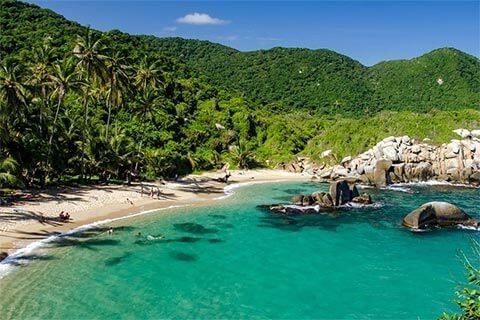
Tayrona covers a total of 15,000 hectares, protecting a rich variety of wildlife and plant life, along with archaeological sites.
Tayrona National Park is the most visited and best-loved park among travelers to the Colombian Caribbean. Many young travelers spend weeks sleeping in hammocks or renting a room in the lodging areas. Tayrona has many places to camp with varying facilities, such as public toilets, showers, a restaurant and small shops.
How to get to Tayrona Park
Tayrona Park is located 35 km from Santa Marta. To get there, take the Troncal del Caribe highway toward Riohacha.
Tayrona National Park has three entrances: El Zaino, Calabazo and Palangana.
The El Zaino entrance is the most accessible, as it has public transport from Santa Marta.
Getting there by bus and minibus
To reach the park entrance (El Zaino), take one of the minibuses that leave from the market area in Santa Marta. Sometimes the buses heading to Riohacha also stop at El Zaino.
The distance between Santa Marta and the Tayrona Park entrance is 37 km, and the journey takes about 45 minutes.
Entering the park
Visitors must register and pay at El Zaino, and from there you can walk 50 minutes or take a jeep to Cañaveral beach, then continue to Arrecifes beach, where most of the places to sleep (cabins, camping, hammocks) and restaurants are located.
Entrance prices
Entry is paid at the El Zaino and Palangana ticket offices in cash or by credit/debit card (except American Express); at the Cabo San Juan del Guía and Calabazo entrances, only cash is accepted.
How much is admission to Tayrona Park?
Entrance fees are set by Colombia's National Parks authority and vary by season and visitor type. As a reference (recent rates, subject to change):
Colombian nationals under 5 and over 65: free.
Nationals, residents and Andean Community (CAN) members aged 6 to 25: COP 21,000 (low season) and COP 23,500 (high season).
Nationals, residents and CAN members over 25: COP 28,000 (low season) and COP 33,000 (high season).
Foreign visitors: COP 62,000 (low season) and COP 73,500 (high season).
Cars: COP 17,500. Minibuses: COP 89,500. Motorcycles: COP 11,500.
Tayrona beaches
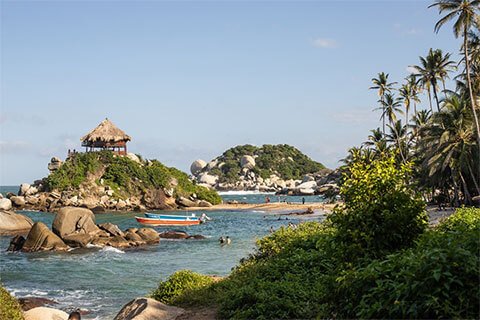
Tayrona National Park has many beaches, some of outstanding beauty with fine sand and turquoise water. Most are backed by lush vegetation and palm trees, and you may even spot monkeys.
Important: Take great care when entering the sea. Currents can be dangerous at some Tayrona beaches, which are often remote and have no lifeguard service. Arrecifes beach is dangerous for swimming, while La Piscina is one of the best for a safe swim.
Walks and trails
Beyond the beaches, Tayrona National Park has several trails that let you discover the area's wildlife and plant life and reach archaeological sites.
Trails:
1: Cañaveral - Arrecifes trail.
2: Nine Stones (Nueve Piedras) trail.
3: Arrecifes - La Piscina - Cabo San Juan del Guía - Boca del Saco trail.
4: Calabazo - Pueblito - Arrecifes trail.
Remember that within the National Park it is forbidden to hunt, light fires in unauthorized areas, drop litter, or cut flowers and branches.

Pueblito
Pueblito is an archaeological site that preserves remains of the Tayrona culture. The most-used trail to reach it starts from Arrecifes. The distance is 14 km, and most of the trail is stone-paved and very well signposted. Along the way to Pueblito you get beautiful panoramas of the Caribbean Sea and the Sierra Nevada.
Map of Tayrona Park
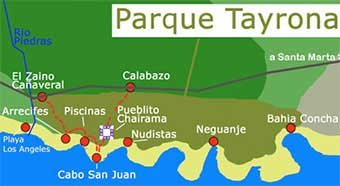
Map: how to get to Tayrona Park
Frequently asked questions about Tayrona Park
It is about 35 km from Santa Marta along the Troncal del Caribe highway. The main entrance is El Zaino, with minibuses from the Santa Marta market area (about 45 min). The other entrances are Calabazo and Palangana.
The fee varies by season (high or low) and visitor type (Colombians and residents pay less than foreign visitors); under 5s and over 65s enter free. The rates are set by National Parks each year, so confirm the current price before you go.
The standouts are Cabo San Juan del Guía, Arrecifes, La Piscina and Cañaveral. Swimming is restricted at several because of strong surf: La Piscina and Cabo San Juan are among the safest for swimming.
Yes. There is camping, hammocks and cabins in areas such as Arrecifes and Cabo San Juan, with toilets, showers and restaurants. In high season it's best to book ahead.
Bring cash (some entrances take cash only), water, sunscreen, insect repellent and comfortable shoes: from El Zaino it's a 50-minute to 2-hour walk to the beaches, or you can take a jeep to Cañaveral.
Yes. National Parks schedules temporary closures during the year for ecological recovery and under agreements with the Indigenous communities of the Sierra Nevada. Check the dates before planning your visit.