Salento, Colombia: Things to Do & the Cocora Valley
Salento is the oldest town in the Quindío department and one of the most visited destinations in Colombia. Set in the heart of the Coffee Region, this charming town is the gateway to the spectacular Cocora Valley and to the world of Colombian coffee culture.
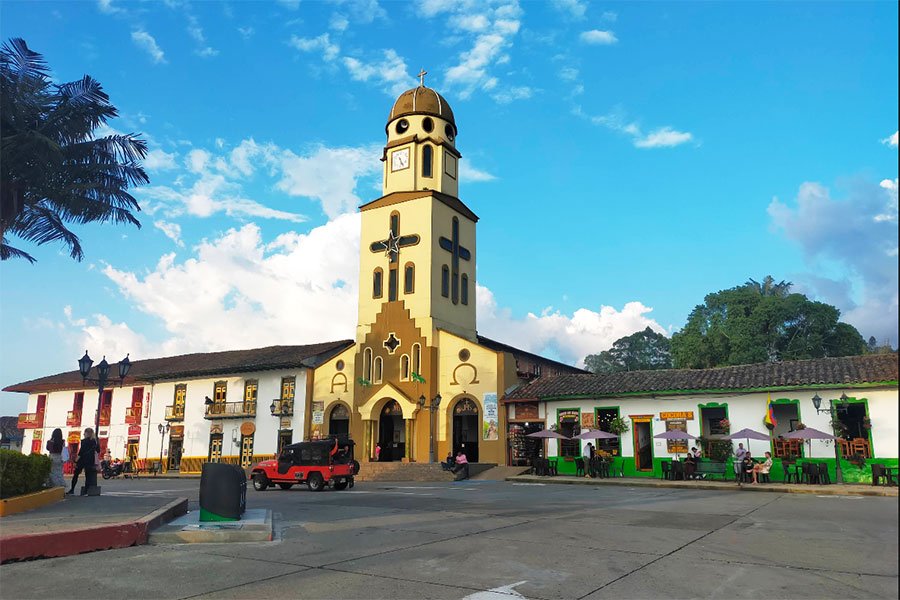
Founded on January 5, 1842, Salento is known as the "Father of Quindío" as the first town settled by the Antioquian colonizers in the region. Today its cobbled streets, brightly colored facades and calm, welcoming atmosphere make it a must-stop for any traveler exploring Colombia.
Salento is part of Colombia's Coffee Cultural Landscape, declared a UNESCO World Heritage Site in 2011, which makes it a destination of great cultural and natural value worldwide.
How to get to Salento
Salento is 26 km from Armenia, the capital of Quindío, and about 36 km from Pereira. Its strategic location in the Coffee Region makes it easy to reach from Colombia's main cities.
By air
The nearest airport is El Edén International Airport in Armenia, with flights from Bogotá, Medellín, Cali and other Colombian cities on airlines such as Avianca, LATAM and Wingo. From the airport, take a taxi or bus to the Armenia bus terminal and then a bus to Salento.
You can also fly into Matecaña International Airport in Pereira, which has a wide range of domestic and international flights, and travel overland to Salento from there.
By bus
From the Armenia bus terminal, buses to Salento leave roughly every 30 minutes, taking 45 minutes to an hour. There is also a direct connection from Pereira, especially in high season.
Approximate travel times to Salento: Bogotá 7-8 h / Medellín 5 h / Cali 4 h / Armenia 45 min / Pereira 1 h / Manizales 2 h.
Armenia bus terminal: Carrera 19 # 35N-18, Armenia, Quindío.
The Willys: the Coffee Region's classic ride
Once in Salento, the star form of transport is the Willys — the iconic off-road jeeps that were once World War II military vehicles and are now a cultural and tourism symbol of the Coffee Region. From Salento's main square, the Willys run frequently to the Cocora Valley, the coffee farms and nearby hamlets. The ride to the Cocora Valley costs around COP 8,000 each way (2025 reference). The Willys start running at 7 a.m., so it's best to go early to avoid waits.
Tourism in Salento
Salento brings together, in one place, three of the great passions of travelers in Colombia: lush nature, authentic coffee culture and traditional village architecture. The historic center is beautifully preserved, with its main square ringed by brightly painted bahareque (wattle-and-daub) houses, typical of the Antioquian settlement.
Salento's weather is cool and pleasant all year, averaging around 18°C (64°F). The best time to visit is during the dry seasons, from December to March and June to September, when the weather is more stable for outdoor hikes.
The town has a full range of amenities: cafes, restaurants, hostels, countryside hotels, craft shops and lively nightlife in the bars of the Calle Real. Despite being very popular, Salento keeps its village soul and the warmth of its people.
Top sights in Salento
Cocora Valley
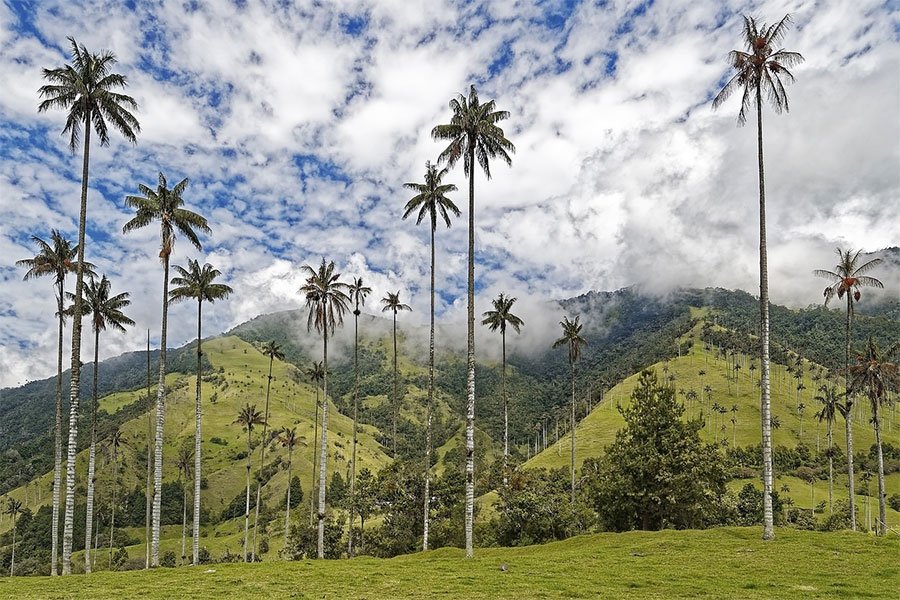
The Cocora Valley is without doubt Salento's most famous attraction and one of Colombia's most iconic landscapes. Just 10 km from town, the valley is home to the Quindío wax palm (Ceroxylon quindiuense), Colombia's national tree and the tallest palm in the world, reaching up to 60 meters.
The sight of these giant white palms rising through the Andean mist is like nothing else. The valley spans altitudes from 1,800 to 2,400 m, and the main route is a 3-to-5-hour loop through cloud forest, across suspension bridges over the Quindío River and past panoramic viewpoints.
The most popular trail does the loop counterclockwise, so you reach the towering palms on the way down for a truly striking visual effect. For more palms and fewer tourists, head to the La Carbonera area on the far side of the valley.
From the Cocora Valley you can also access Los Nevados National Natural Park, one of the country's most important protected areas, with snow-capped peaks such as the Nevado del Ruiz, the Nevado del Tolima and the Nevado Santa Isabel.
Practical tip: Go as early as possible, ideally before 8 a.m., to catch the morning mist among the palms and avoid the biggest crowds. The last Willy leaves the Cocora Valley between 6:00 and 6:30 p.m.
Calle Real
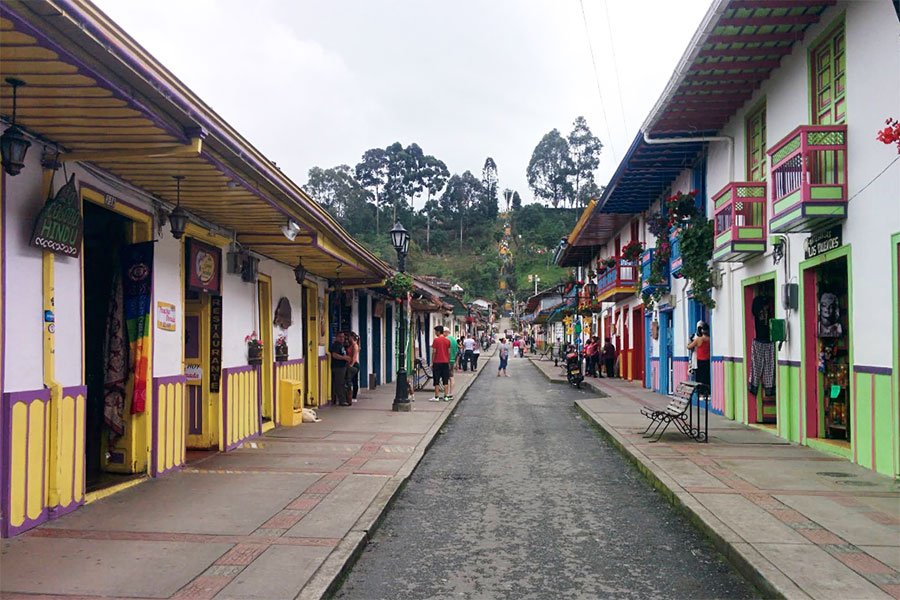
The Calle Real is the soul of Salento and the town's essential walk. About 500 meters of brightly colored facades, with doors and windows framed in hand-carved wood typical of Antioquian settlement architecture. This pedestrian street holds most of the commercial and tourist activity: restaurants, cafes, craft shops, galleries, bars and hostels.
On the Calle Real you can buy guadua-bamboo crafts, ruanas (wool ponchos), hats, bracelets and all kinds of local souvenirs. The best time to stroll it is at sunset, when the light paints the facades gold and the mood turns festive and relaxed at once. It is called "Real" (Royal) because the town's most influential residents historically lived there.
At the end of the Calle Real, more than 200 steps lead up to the Alto de la Cruz, Salento's main viewpoint.
Alto de la Cruz viewpoint
Climbing the steps at the top of the Calle Real brings you to the Alto de la Cruz viewpoint, with a spectacular panorama of the Cocora Valley, the Quindío River, the coffee fields and the town of Salento itself. It is one of the most photographed spots in the Coffee Region. The climb is lined with the Stations of the Cross, making it a pilgrimage route as well.
At the top, vendors sell local sweets, honey, obleas (wafers) and warm drinks for the cool air, and some have telescopes for a closer look at the scenery. Going up at sunset to watch the sun drop behind the mountains is highly recommended.
Coffee farms
Visiting a coffee farm is one of the most authentic and memorable experiences Salento offers. On the farms, guides walk you through the whole coffee process: from growing and picking the beans to roasting, grinding and brewing the cup. At many farms you can walk among the coffee bushes, pick beans by hand and taste a freshly brewed cup right where it is grown.
Among the most recommended are Finca El Ocaso, 4 km from Salento (reachable by Willy or an hour's walk), with a classic coffee house over 100 years old, gardens of native flowers and several hectares of coffee; and Finca Las Acacias, a family-run estate with a viewpoint over the coffee fields. Guided tours start from around COP 40,000 per person (2025 reference) and include a coffee tasting.
The Willys from Salento's main square connect directly to several coffee farms in the area.
Acaime Nature Reserve
The Acaime Nature Reserve sits along the Cocora Valley route, deep in the cloud forest. It is a hummingbird haven where you can watch more than 14 species of these extraordinarily colorful birds feeding at the natural feeders. The reserve also holds great Andean plant diversity, with more than 3,000 plant species recorded in the area — a must for birdwatchers and nature photographers.
Plaza de Bolívar and historic center
The heart of Salento is its main square, ringed by bahareque houses with wooden balconies and facades painted yellow, blue, green and red. The Our Lady of Carmen Church, with its white facade and yellow towers, is the town's most emblematic building and a fine example of the region's colonial architecture. The square is the main gathering point: it's where the Willys depart, where street-food vendors set up, and where locals enjoy the afternoon sun.
Birdwatching
Salento and its surroundings are a paradise for birdwatching. The upper Quindío River canyon and the cloud forests of the Cocora Valley are home to endemic and strikingly colorful species. Besides the hummingbirds at the Acaime reserve, you can spot tanagers, toucans, parrots and the rare yellow-eared parrot, an endangered species that depends on the wax palms for survival.
Tejo: the national sport
An activity not to miss in Salento is playing tejo (also called turmequé), Colombia's national sport. You throw a metal disc onto a clay board where small gunpowder packets are hidden; a direct hit makes them explode with a bang, scoring the most points. At the Los Amigos court and several spots around town you can learn to play with the locals — a fun and very authentic experience.
Food in Salento
Trout is Salento's signature dish. Thanks to the many trout farms along the Quindío River, it is prepared in countless ways: with garlic, in mushroom sauce, smoked or fried. Almost every restaurant in town serves it, and it's a must after a long hike through the Cocora Valley.
Other dishes and flavors not to miss on a Salento food tour include the bandeja paisa, hen sancocho (stew), fried plantains and chócolo (sweet-corn) arepas. For those with a sweet tooth, coffee- and arequipe-based desserts are a treat. A must is a coconut lemonade, one of the town's most popular drinks. And of course, no visit is complete without tasting the local coffee at one of the cozy shops along the Calle Real.
Tips for visiting Salento
Best time: The dry seasons, December to March and June to September, are the best times to visit. During Holy Week, mid-year holidays and December the town fills with tourists, so book accommodation well in advance.
Clothing and footwear: Dress in layers, as the weather can change through the day. For the Cocora Valley, waterproof boots or shoes are essential, especially in the rainy season, along with a rain jacket or poncho.
Support local business: The town's crafts are made by local communities. Buying them directly from the workshops and craft stalls helps the families of Salento.
To avoid the crowds: Salento gets hundreds of visitors on weekends. If you can, visit on a weekday to enjoy the town more peacefully and get better photos of the Calle Real.
Map of Salento, Quindío
Frequently asked questions about Salento
In the Quindío department, in the heart of the Coffee Region, 26 km from Armenia and 36 km from Pereira. It is the gateway to the Cocora Valley.
The nearest airport is El Edén (Armenia); Matecaña (Pereira) also serves the area. Buses to Salento leave the Armenia terminal every 30 minutes (45 min to 1 h); there is also a direct connection from Pereira.
The Willys (classic jeeps) leave from Salento's main square to the Cocora Valley; the ride takes about 30 minutes and is part of the experience.
Hike the Cocora Valley and its wax palms, walk the Calle Real and the viewpoint, visit coffee farms with a coffee tour, and admire the town's colorful facades.
It is the oldest town in Quindío and part of the Coffee Cultural Landscape, declared a UNESCO World Heritage Site in 2011.
It has a mild mountain climate year-round. For the Cocora Valley, go early and on clear days; weekends and high seasons are the busiest.