Colombia Travel Information: Practical Guide & Tips
Everything you need to know before you travel to Colombia: safety, visas, the best time to go, money and more.
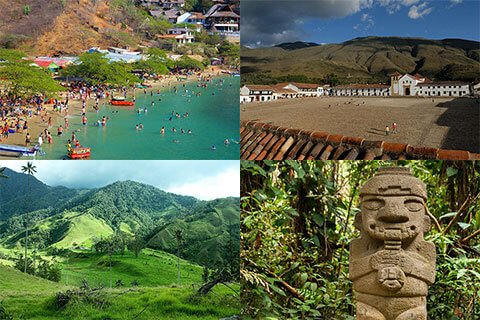
About Colombia
Colombia sits in the northwest of South America and covers about 1,141,748 km², with an extraordinary variety of landscapes and climates. It is one of only a handful of countries with coastlines on two oceans: the Pacific and the Caribbean.
It is also one of the most biodiverse countries on Earth. Within its borders you will find Amazon rainforest, great rivers such as the Magdalena, the Atrato and the Cauca, deserts, vast plains, mountain ranges topping 5,000 meters, snow peaks, volcanoes, tropical beaches, coral reefs and modern cities.
Colombian culture is rich and varied, shaped by the blend of Indigenous, African and Spanish influences. Music, literature, theater and dance all hold a special place in everyday life, and Colombians are known around the world for their warmth and friendliness toward visitors.
Is Colombia safe for tourists?
Colombia welcomes millions of international travelers every year, and the main tourist areas — Cartagena's old town, Medellín, Bogotá, the Coffee Region, Santa Marta and the Caribbean islands — are generally safe and used to visitors. As in any large country, a few common-sense precautions go a long way:
- Avoid flashing expensive phones, cameras or jewelry in the street (locals call it no dar papaya — don't make yourself an easy target).
- Use ride-hailing apps or registered taxis rather than hailing cabs on the street, especially at night.
- Withdraw cash from ATMs inside banks, malls or hotels rather than isolated machines.
- Keep an eye on current advice for remote rural areas and some land border zones before traveling there.
Visa & entry requirements
Colombia is an easy country to enter for most tourists. Citizens of the United States, Canada, the United Kingdom, Australia, New Zealand and the European Union — among many others — do not need a visa for tourism and receive a stay permit (PIP) of up to 90 days on arrival, which can usually be extended for another 90 days at a Migración Colombia office.
Make sure your passport is valid for the length of your stay. Immigration may ask for proof of onward or return travel. Travelers also typically need to complete the free online Check-Mig form within 72 hours before entering or leaving the country.
Best time to visit Colombia
Because Colombia sits near the equator, there is no real summer or winter — temperature depends far more on altitude than on the calendar. Bogotá is cool year-round, Medellín enjoys its famous spring-like climate, and the Caribbean coast stays warm all year.
The drier, most popular travel months fall roughly around December to March and July to August, which are ideal for the Caribbean and the Andes. The greener, rainier months bring fewer crowds and lush scenery. In short: Colombia can be visited any time of year.
Electricity and plugs
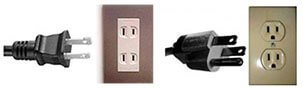
Electricity in Colombia runs at 110 volts (110V AC, 60Hz), the same as the United States. Sockets use the North American style with two flat pins, sometimes with a third round grounding pin. Travelers from the US and Canada will not need a voltage converter; visitors from Europe, the UK or Australia should bring a plug adapter.
Money and currency
The official currency is the Colombian peso (COP). Banknotes in circulation are 1,000, 2,000, 5,000, 10,000, 20,000, 50,000 and 100,000 pesos, with coins of 50, 100, 200, 500 and 1,000.

You can exchange US dollars and euros for pesos at most banks, airports and official exchange houses (casas de cambio). For your safety, avoid changing money on the street or at informal stalls.
Credit and debit cards
Most international credit and debit cards are accepted in Colombia. Shops, supermarkets, hotels, restaurants and bars in cities widely accept card payments, though it is wise to carry some cash for small towns, markets and transport.
Bank hours
Banks in Colombia generally open from 8:00 to 11:00 am and from 2:00 to 4:00 pm, though hours vary by branch and city.