Manizales: Tourism, Top Sights & Things to Do in Caldas
Manizales sits in the Caldas department, in the Coffee Region, and is known as the "City of Open Doors". It is an ideal base for discovering Colombia's coffee country.

Manizales has some of the most beautiful coffee farms in Colombia, as well as several nature parks.
The city is a great destination for a weekend trip. With a pleasant climate at 2,150 meters above sea level, it is the capital of Caldas and lies in a mountainous area of the Central Andes, crowned by the Nevado del Ruiz volcano.
How to get to Manizales
Manizales has La Nubia airport, with domestic flights. The new Coffee International Airport is under construction and will be one of the country's most modern airports, handling domestic and international flights.
The city has a bus terminal with services to cities across Colombia, and is linked to Pereira and Armenia by the modern Coffee Highway (Autopista del Café).
The distances from Manizales are: Bogotá 290 km, Medellín 180 km, Pereira 50 km, Armenia 70 km, Cali 384 km, Barranquilla 1,023 km.

Travel information
Manizales has a strong bullfighting tradition that peaks during the famous Manizales Fair.
It is considered a "university city" with an academic character, home to ten universities and various study centers.
Manizales preserves a historic center with colonial and republican-era buildings. Part of the center and its buildings were declared a national historic heritage site.
Historic center of Manizales
The fires that struck the center of Manizales in 1925 and 1926 led to a harmonious reconstruction that consolidated a set of buildings now regarded as republican architecture. More than 250 buildings went up in five years, combining period materials and techniques — such as bahareque, guadua bamboo and rammed earth — with the concrete and structural iron introduced by the European firms in charge of the rebuilding.
The historic center, declared a national cultural-interest site in 1982, covers an area of 48 blocks.
The designation came for the high degree of preservation of the buildings and for distinctive features such as the city layout around a main square, houses with a central patio, long corridors and a back patio, and the use of the ground floor for commerce and the upper floor for housing.
Among the emblematic buildings of the historic center are the Government Palace, the Manizales Basilica Cathedral, the Sanz building, the Estrada house and the Archbishop's Palace.
Places to visit in Manizales
Plaza de Bolívar
Plaza de Bolívar is the most important public space in Manizales, framed by landmark buildings such as the Basilica Cathedral, the Government Palace and the former Licorera de Caldas building. The open plaza holds several artworks, among them the sculpture of the Liberator, "Bolívar Cóndor", by the master Rodrigo Arenas Betancourt, and the ceramic murals by Caldas artist Guillermo Botero — "Vientos de Libertad", "Preludio de las Lanzas Llaneras" and "Grupo Escultórico".
Government Palace
The Government Palace was built to replace the building destroyed by the 1925 fire, so it belongs to the city's republican heritage. Its construction used a mix of bahareque and reinforced concrete, while its decoration features plant and animal motifs molded in cement and plaster — birds, acanthus, amphorae and medallions, complemented by friezes, cornices, capitals and attics. In 1984 the Caldas Government building was declared a national cultural-interest site, and it is also part of the 1996 designation of the republican-architecture ensemble in central Manizales.
The palace suffered structural damage in the 1999 earthquake, so the Caldas government had to move to another building and begin restoration work.
Today the palace houses most of the departmental administration offices, and its highlights include the open interior cloister, the monumental gateway onto Plaza de Bolívar, the gallery corridors with round arches, the use of wood in doors and windows, and the abundant decoration with animal figures.
Manizales Cathedral
The cathedral's history dates to 1850, when a small chapel was built on the site it now occupies. Later, in 1888, a church of walnut and oak wood was built, which was damaged by the fires of 1925 and 1926.
The cathedral is the most significant church in the department and is seen as a living museum of Manizales for its elements of artistic and historic value, such as the three bronze doors at the entrance carved by the Andalusian artist Leopoldo del Río. The figures depict local church life, the chapel that once stood on the site, and the fire that consumed the cathedral.
Manizales Cathedral is a magnificent building of 2,400 m² and 106 m tall, part of the republican architectural ensemble of the historic center. It is neo-Gothic in style, with semicircular and vaulted arches and pointed arches that open space for the stained-glass windows. It rises from a Greek-cross floor plan topped by five pointed towers.
Inside, the highlights include the central marble altar with a gilded wooden baldachin and 64 carved religious figures; the tubular organ, a large, resonant instrument imported from Canada in 1952; and the stained glass, old books, the Blessed Sacrament chapel and the crypt.
The "Polish Corridor"
The Polish Corridor is the walkway wrapping around the top of the central spire of the Manizales Basilica Cathedral. At 104 m high, it has the safety measures needed for visitors to take in a 360-degree view over the city and the surrounding countryside.
Access is from inside the cathedral, climbing more than 500 steps on a guided visit of 40 to 60 minutes. The tour is accompanied by a historical account of the church's construction, a photo exhibition on local history, and views of the neighboring buildings. Hours: Tuesday to Sunday, 9:00 a.m. to 4:00 p.m.
Chipre Observatory Park
The Chipre district is one of the city's most traditional, in the southwest. Avenida 12 de Octubre, flanked by the Boulevard of the Colonizers, is Chipre's main route for vehicles and pedestrians. From here you can see the Western Andes, the Cauca River valley and the coffee country of the city's rural area.
Here you'll find the Observatory Park, a public space arranged around the "Al Cielo" tower, an artificial lookout built on a water reservoir tank. From the top you get a panorama of ten Coffee Region towns, plus wall climbing, a large swing and, especially at night, stargazing through public telescopes. Hours: daily, 10:00 a.m. to 11:00 p.m.
Monument to the Colonizers
On Avenida 12 de Octubre in Chipre stands the Monument to the Colonizers, a sculptural group by the master Guillermo Vallejo, created for the civic campaign of the city's 150th anniversary. That campaign gathered donated keys and copper cables to obtain the material from which the work is made.
The monument's main theme is the Antioquian colonization, represented in the suffering and effort of the animals and settlers who reached the city in the 19th century; it also integrates landmarks such as the Basilica Cathedral and the Cable Tower. Hours: Tuesday to Sunday, 9:00 a.m. to 4:00 p.m.
University of Caldas Museum Center
The museum is at the university's Palogrande campus, in the building that once housed the Manizales major seminary. The center brings together archaeology, art, geology and natural-history collections, and also has laboratories, a restoration workshop, a documentation center, an auditorium and spaces for permanent and traveling exhibitions.
The archaeology collection has more than three thousand pieces of ceramic, goldwork and stone; the permanent exhibition, "Pre-Hispanic Peoples of the Middle Cauca", tells the story of the Indigenous communities that inhabited the region. The geology and paleontology collection includes rocks, minerals and fossils, highlighted by a giant armadillo more than 12 million years old.
The natural-history collection has eight thousand specimens of Colombian fauna, nationally recognized especially for its butterfly display. Finally, there is an art collection tied to twelve sketches donated by Caldas artist David Manzur, "The Martyrdom of Saint Sebastian", in homage to Colombian footballer Andrés Escobar. Hours: Monday to Friday, 8:00 a.m. to 12:00 p.m. and 2:00 p.m. to 6:00 p.m. Free admission. Info: museo@ucaldas.edu.co
Manizales Gold Museum
The Gold Museum is part of the cultural network of the Bank of the Republic and is one of the seven halls nationwide that display the country's historic collection. The Manizales one, called the Quimbaya Hall, brings together goldwork and ceramics. The exhibition is open to the public, with programmed activities such as guided tours, educational animations, traveling kits, creative workshops, seminars and history, anthropology and archaeology workshops. Website: banrepcultural.org/manizales
Samoga, Interactive Museum of Science and Play
The Samoga Interactive Museum is a cultural and educational space for understanding technology through play. It programs exhibitions, courses, workshops and activities so that visitors — mainly children and young people — learn about scientific subjects interactively. Samoga also hosts the Astronomical Observatory, a place to learn about astronomy and make observations with technical equipment. Hours: Tuesday to Friday, 8:00 a.m. to 12:00 p.m. and 4:00 p.m. to 6:00 p.m.; Saturdays, 2:00 p.m. to 5:00 p.m. Info: samoga.manizales.unal.edu.co
Former railway station
The design and construction of the building, dating from 1926, is attributed to the US firm Ulen & Co. It served as the railway station until 1959, when the train was shut down. After some years of abandonment and use as shelter for people affected by natural disasters, the building was handed over on loan to the Autonomous University of Manizales in 1979, which took charge of its restoration and preservation as a national cultural-interest site.
Cable Tower
The Herveo tower is one of the 376 structures that supported the aerial cableway linking Manizales and Mariquita in the last century. It was the only tower made of wood: the ship carrying the original iron tower was sunk in the Atlantic by a German submarine during World War I, so the English engineer James Lindsay had to make a replica with local materials. When the cableway fell into disuse, the tower was moved to Manizales and placed on Avenida Santander at Calle 65, in Antonio Nariño Park, opposite the old Cable station, now home to the National University's Architecture faculty. The Cable Tower was declared a national cultural-interest site in 1984 and is a symbol of the city, surrounded by cafes, clubs and other entertainment venues.
El Prado Public Forest
El Prado Public Forest is one of the most important recreational areas of the Caldas capital: a large natural expanse at km 7 on the road to the Magdalena, with gardens, small secondary forests and many outdoor sports facilities. Its attractions include an Olympic pool, an educational track, a locomotive from the old railway, and football, basketball and tennis courts plus bicycle- and motocross tracks. Considered a green lung of the city, it hosts many sporting competitions and recreational activities. Hours: daily, 7:00 a.m. to 5:00 p.m.
Alcázares Arenillo Ecopark
A natural site in the municipal network of parks and ecoparks, in the Alcázares neighborhood, in a hollow formed by the geological transformation of the Morrogacho ridge. The area is a premontane humid forest with coffee scenery and traditional farming; the vegetation is dominated by yarumo and balso trees and ornamental plants. Birdwatching, interpretive trails and access to a guadua-bamboo lookout are some of the activities. Hours: Tuesday to Sunday, 9:00 a.m. to 5:00 p.m. Info: (6) 8720420.
Río Blanco Nature Reserve
The Río Blanco Nature Reserve is a hydrographic and forest reserve of great importance, protecting the main water source feeding the Manizales aqueduct, so it is managed by Aguas de Manizales together with civil associations and environmental NGOs. Just 3 km from the city, it spreads over 4,343 hectares of montane and cloud forest, with an average temperature of 11 ºC. Scientific inventories have recorded 362 bird species, both migratory and endemic, some of them endangered. Birdwatching is one of the main activities, along with nature walks.
Los Yarumos Ecopark
Los Yarumos Ecopark is on the north side of the city, next to the Minitas and Yarumos neighborhoods. It covers 53 hectares split between a tropical humid forest and a recreational and cultural area offering a restaurant, small theater, plaza and meeting rooms.
Activities include interpretive nature trails and adventure sports such as canopy, canyoning and rappelling. In the cultural zone there is a children's area, climbing walls and a "columbódomo", a space to interact with homing pigeons.
Recinto del Pensamiento
An ecotourism complex equipped for all kinds of events, with lodging, a restaurant and meeting rooms of various capacities and the latest technology. The 180-hectare site is set in humid forest, home to the "Ritual del Café" tasting school and the Wood Pavilion, a work in which Manizales architect Simón Vélez used guadua bamboo as the essential material.
Activities and sites for visitors are varied: two-hour guided walks along an ecological trail; a chairlift ride over the forest; and a garden with more than 120 butterfly species and a collection of orchids and medicinal and aromatic plants. Hours: Monday to Saturday, 9:00 a.m. to 4:00 p.m. Info: Km 11, road to the Magdalena. (6) 8897070 ext. 2990.
Termales del Otoño Hotel
The Termales del Otoño Hotel offers lodging in countryside rooms and cabins with a thermal jacuzzi, fireplace, heating and minibar. It also has a restaurant, bar, spa and thermal pools, plus a high-tech convention center for up to 700 people used for corporate and academic events. Its main attraction is the thermal pools, open not only to guests but to day visitors. The spring that feeds them has chemical and temperature properties suited to therapeutic, cosmetic and relaxation use. Info: Km 5, old road to the Nevado del Ruiz. (6) 8740280. Website: termaleselotono.com
Tierra Viva
Tierra Viva is a private recreational park in the Gallinazos area, 13 km from the city of Manizales. One of its main attractions is the hot-spring water held in stone pools fed by a natural source from Los Nevados National Park. The water is rich in sulfur, calcium, zinc, magnesium, iron and phosphorus, with a usual temperature of 35 ºC. Visitors can also enjoy a walk along the Chinchiná River ecological trail and horseback rides through forest. There is an interactive farm where you can feed domestic animals such as goats, cows, ducks, rabbits and hens, and a restaurant whose signature dishes include trout and grilled veal. Hours: Monday to Thursday, 10:30 a.m. to 11:30 p.m.; Friday to Sunday, 10:30 a.m. to 1:00 a.m. Info: (6) 8720420. Website: termalestierraviva.com
Manizales Bullring
The Manizales bullring is one of the busiest in Colombia, with Moorish-style features.
Sancancio Hill
Sancancio Hill is an emblem of Manizales. Its summit, crowned by a large cross, can be seen from various parts of the city.
San Esteban Cemetery
The cemetery is a tourist attraction for its history and the architectural richness of its mausoleums.
Tango Street
Tango has its place in Manizales: in various bars and cafes you can hear it played. The tango venues are concentrated on Calle 24 and Carreras 22 and 23.
Towns to visit from Manizales
From Manizales you can take various trips through the coffee country to enjoy the green landscapes of bamboo and coffee fields. Some towns and places to visit are:
Neira
Neira is a town known for its typical guadua-bamboo buildings and very attractive scenery.
Riosucio
Riosucio is a classic town famous for the "Carnival of the Devil" held every year.
Aguadas
Aguadas was declared a historic heritage town of Colombia for its bahareque buildings. Nearby you can visit streams with lovely waterfalls.
La Dorada
La Dorada is a lowland, warm-weather town on the banks of the Magdalena River, ideal for hotels and farms with pools.
Termales del Ruiz
These hot springs sit amid stunning scenery and have a range of hotels for visitors.
Nevado del Ruiz and Los Nevados National Park
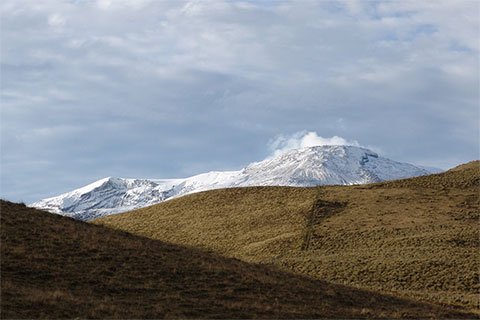
On the border of the Caldas and Tolima departments lies Los Nevados National Park, crowned by the famous Nevado del Ruiz at 5,400 meters, one of the highest peaks in Colombia. Other snow peaks in the park are El Cisne (4,700 m), Tolima (5,200 m), Quindío (4,750 m), Santa Isabel (4,950 m) and Olleta (4,850 m).
Los Nevados National Park can be explored along various trails from the El Cisne Visitor Center. Visitor facilities are in the Brisas area, Chalet Arenales and Refugio del Ruiz. (Access depends on volcanic activity and National Parks permits — confirm the status before going.)
Santagueda (Palestina)
Santagueda is a tourist and recreational area 23 km from Manizales. Thousands of people visit to enjoy its resorts, farms, hotels and holiday centers. La Rochela and CAFAM are recreational centers in Santagueda with cabins, camping, pools and various facilities for visitors.
The Manizales Fair
The Manizales Fair is one of the most famous in all of Colombia, held every year during the first week of January. Thousands of people take part in the various events. The fair was declared a Cultural Heritage of Colombia. Its bullfights are among the most traditional in the country, drawing the leading matadors and bull-breeding of the bullfighting world.
Frequently asked questions about Manizales
It is the capital of Caldas, in the Coffee Region, at 2,150 m altitude, in a mountainous area of the Central Andes crowned by the Nevado del Ruiz.
La Nubia airport currently operates domestic flights; the Coffee International Airport is under construction. By road, via the Coffee Highway: Pereira 50 km, Armenia 70 km, Medellín 180 km, Bogotá 290 km.
Explore the historic center and the Cathedral, climb to the Monument to the Colonizers, visit coffee farms and, in season, head to the Nevado del Ruiz and the area's hot springs.
It is the city's big festival, in January, with parades, exhibitions and a strong cultural tradition; one of the best-known fairs in Colombia.
Yes, it is the gateway to Los Nevados National Park. Access depends on volcanic activity and National Parks permits, so confirm the status before going.
Mild weather all year. January (the Manizales Fair) is the liveliest time; for the mountains, choose clear days.