Caño Cristales: the River of Five Colors in La Macarena
Caño Cristales is known as the most beautiful river in the world. Located in the Sierra de La Macarena, Meta, its waters turn red, yellow, green, blue and black thanks to an endemic aquatic plant that blooms for only a few months each year.
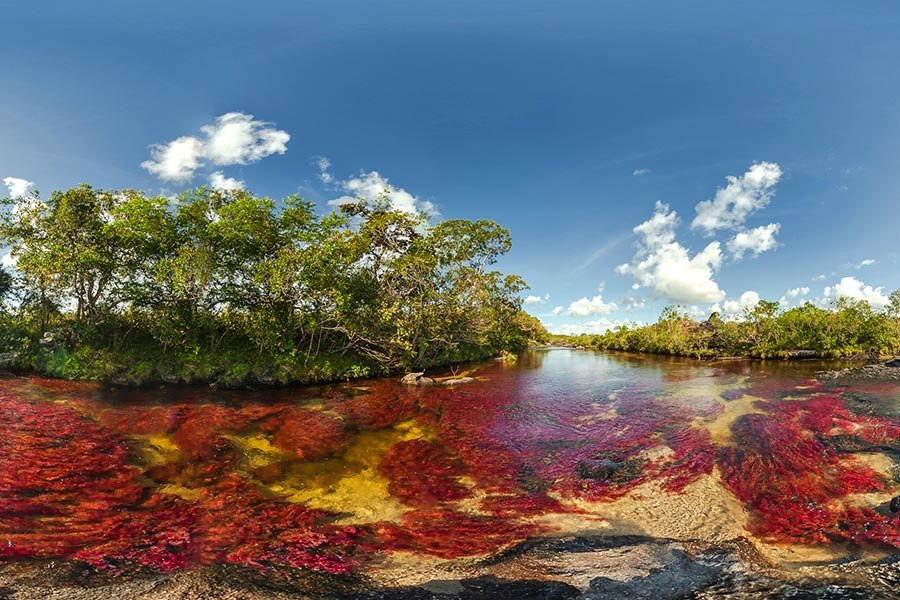
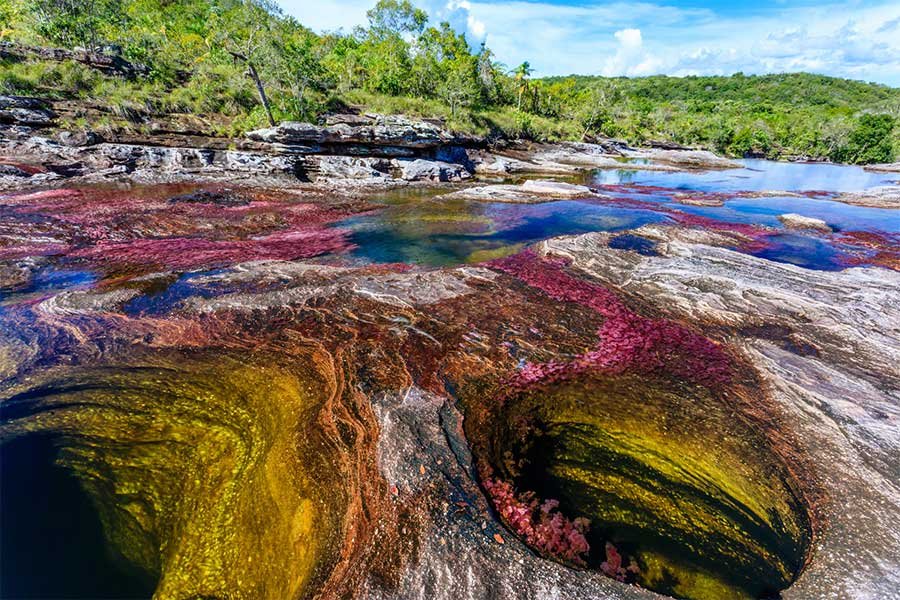
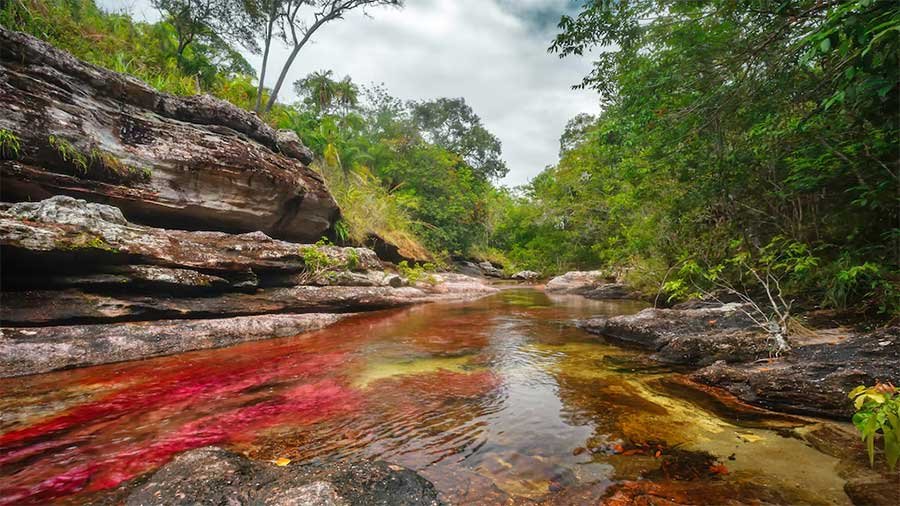
The display of color at Caño Cristales is the work of Macarenia clavigera, a prehistoric, endemic aquatic plant that clings to the river's rocks. Depending on sun exposure and water level, it shifts between deep red and pink, turning the riverbed into a multicolored carpet. Combined with beds of black volcanic sand, the yellow of other algae and the deep blue of the pools, the result is a river that looks hand-painted.
Caño Cristales lies within the Sierra de La Macarena National Natural Park, in the Meta department. This region is the meeting point of four great ecosystems — the Amazon, the Orinoquía, the Andes and the Guiana Shield — making it one of the most biodiverse areas on the planet.
When to visit Caño Cristales: the season
Caño Cristales can only be visited between June and November, when the park is open to the public. During this period the rains keep the river at the ideal level for Macarenia clavigera to bloom and reveal its colors.
Between December and May the river dries out during the dry season. In those months the plant lies dormant, almost invisible on the exposed rocks, and the park closes to tourism to protect the ecosystem. If images of a "dead" river or warnings about its disappearance circulate on social media during those months, it is simply the river's natural cycle.
The best months within the season are August, September and October, when the colors are at their most intense. July is also a good option, though it is high season and spots sell out quickly. October and November have fewer tourists and equally vibrant colors.
How to get to Caño Cristales
The most practical way to reach Caño Cristales is to fly to La Macarena, the town that serves as the gateway to the park.
Flights from Bogotá: the most frequent route. Satena and Clic Air operate direct flights from Bogotá's Puente Aéreo to La Macarena airport (Los Colonizadores). Seasonal flights run between July and November. Duration: about 1 hour.
Flights from Villavicencio: there are short flights from Villavicencio's Vanguardia airport. You can also reach Villavicencio by road from Bogotá (3–4 hours) and take a flight from there.
Flights from Medellín: Clic Air operates direct flights from Olaya Herrera airport during the season (July–November).
Because flight seats are limited and sell out quickly in high season, it is best to buy tickets at least 2 months in advance.
By land: it is possible to reach La Macarena by road from Neiva or San Vicente del Caguán, but the roads are not fully paved and the trip can be long and complicated depending on weather conditions. It is not the recommended option for most visitors.
From La Macarena to Caño Cristales
Once in La Macarena, reaching Caño Cristales requires a transfer by boat along the Guayabero River (about 20 minutes) and then a 4×4 ride to the authorized trailheads. The route inside the park must always be done with a certified local guide.
Tours and packages to visit Caño Cristales
Visiting Caño Cristales is not a trip you improvise: it requires booking flights in advance, accommodation in La Macarena and an authorized guide. The vast majority of visitors come through a tour package that includes all of these components.
The most affordable plans from Bogotá start at around COP $900,000 per person for 3-day packages. More complete 4- or 5-day packages from Bogotá can run around COP $2,000,000–$4,000,000 depending on the category of accommodation and the services included.
The minimum recommended stay is 3 days: flights arrive around midday, so the first day is only partly usable. With 3 days you can explore the park's main trails at a relaxed pace.
The trails of Caño Cristales
The river has two main branches. The left branch is home to the Los Hoyos, La Virgen, Los Cuarzos and Los Pianos waterfalls. The right branch has the Salto del Águila waterfall. The natural pools open for swimming include Los Ochos, La Piscina del Turista and El Tapete Rojo. You can also visit Caño Cristalitos, a smaller and equally colorful branch that serves as a preview of what you will see on the main river.
For those who want a viewpoint, there is a trail up a hill with views of the Guayabero River and much of the Sierra de La Macarena. It is a moderate hike with frequent sightings of monkeys and birds.
What to bring to Caño Cristales
The park has strict rules to protect the ecosystem. Sunscreen, insect repellent and creams are prohibited inside the park, as their ingredients directly harm Macarenia clavigera. Single-use plastic bottles and cigarettes are also prohibited.
Recommended items: lightweight, quick-drying long-sleeved clothing, shoes with good grip (trail type) and water sandals for river crossings, a hat, UV sunglasses, a light raincoat, a reusable water bottle and a small backpack. A yellow fever vaccine administered at least 10 days in advance is essential. Bring cash, as ATMs are limited in the region.
Biodiversity in La Macarena
Beyond Caño Cristales, the La Macarena region offers exceptional ecotourism. The Laguna del Silencio and Bajo Losada are two of the best places to spot caimans, turtles, monkeys and hundreds of bird species. Tourism in the region is community-based: more than 650 local families live directly from tourism in La Macarena and take an active part in guiding and services.
Caño Cristales was closed to tourism for decades because of the armed conflict and only reopened in 2010. Today it is a safe destination with a permanent institutional presence and tourist infrastructure that has improved markedly year after year.
Map of La Macarena and Caño Cristales
Frequently asked questions about Caño Cristales
Only between June and November, when the park is open and the water level lets the color-giving plant bloom. Between December and May the river dries up and the park closes to protect the ecosystem.
Because of Macarenia clavigera, an endemic aquatic plant that clings to the rocks and, depending on the sun and water level, turns red and pink. Together with the black sand, yellow algae and blue pools it forms the 'river of five colors'.
August, September and October have the most intense colors. July is also good but very busy; October and November have fewer tourists and equally vivid colors.
The easiest way is to fly to La Macarena (Meta) from Bogotá or Villavicencio. The visit is done only with authorized guides and tours, as it is inside the Sierra de La Macarena National Park.
Yes. Access is regulated by the National Parks authority and you can only enter with authorized operators and guides, who organize the routes and the quotas.
In the Sierra de La Macarena, Meta department — a meeting point of the Amazon, the Orinoquía, the Andes and the Guiana Shield, one of the most biodiverse areas on the planet.